Stone Roses Procreate Color Palettes: Your Green Tone Design Toolkit
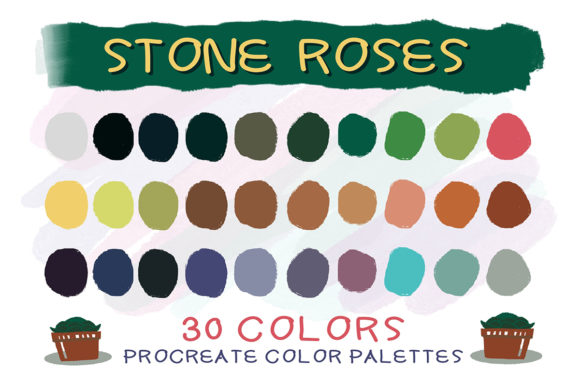
Finding the right color palette for digital illustration can feel like searching for a specific leaf in a dense forest. You know the exact shade you want—that particular mossy green, that deep forest emerald, that soft sage—but assembling it from scratch takes time you don't have. The Stone Roses Procreate Color Palettes solve this problem directly. This collection of 30 green tone color swatches gives you a ready-made toolkit for shading, highlighting, and building complete compositions without the guesswork.
What Makes These Green Tones Work So Well Together
Green is one of the trickiest color families to manage in digital art. Push it too warm and it reads as yellow. Cool it down too much and you're suddenly working with teal. The Stone Roses Procreate Color Palettes sit in that natural, organic sweet spot where greens feel lived-in and real rather than synthetic or overly saturated. Think of the color shifts you see in a moss-covered stone wall, the way light filters through layers of leaves, or the subtle variations in a weathered garden statue. That's the territory these palettes cover.
The 30 swatches aren't just random greens thrown together. They're organized with shading and highlighting built directly into the palette structure. You'll find your dark anchor tones for shadows and depth, mid-range values that carry the bulk of your illustration, and lighter accents for catching light and adding dimension. This means you can pick up a brush, select a shadow tone, paint your form, shift to a mid-tone, then add highlights—all from one cohesive palette without mixing colors manually. For anyone working on botanical illustrations, nature scenes, fantasy landscapes, or any project with significant green elements, this eliminates a frustrating bottleneck in the creative process.
Where These Palettes Fit Into Real Projects
The practical applications go well beyond traditional illustration. If you're a brand strategist working with eco-conscious companies, outdoor brands, or wellness businesses, these greens give you a refined starting point for brand identity exploration. Instead of defaulting to the same overused lime or forest green hex codes everyone reaches for, you can develop something with more nuance and character.
Content creators and social media graphics designers will find these palettes especially useful for seasonal campaigns. Spring and summer content practically demands green, and having a pre-built range of tones means you can produce consistent, professional-looking posts quickly. The same applies to packaging design for food products, cosmetics with natural ingredients, or any product line where green signals freshness, sustainability, or organic origins.
For editorial design and publishing, these tones work beautifully for chapter headers, decorative elements, and illustration accents in books, magazines, and digital publications. Hobbyists and crafters using Procreate for personal projects—greeting cards, planner stickers, digital journaling—will appreciate having shading and highlight options ready to go rather than experimenting with opacity and color mixing every session.
How to Get the Most From Your 30 Swatches
The file you receive is a .swatches file designed specifically for Procreate on iPad. It won't open in Photoshop, Illustrator, or other design programs—this is a native Procreate tool built for that workflow. Installation is straightforward: download the file to your iPad, open it, and it automatically adds to your Procreate palette library. No conversion steps, no third-party apps needed.
Once loaded, take a few minutes to explore the palette before diving into a project. Notice how the tones relate to each other. Try painting simple gradient blocks using consecutive swatches to see how smoothly they transition. This quick exercise reveals the palette's logic and helps you instinctively know which swatch to reach for when you need a specific value or temperature shift.
A few practical observations from working with organized design assets like this: pair these greens with warm neutrals—creams, tans, soft terracotta—for a natural, earthy feel. Combine them with deep navy or charcoal for something more sophisticated and editorial. If you're building logo design concepts, start with the mid-tone greens for your primary mark and use the darker or lighter swatches for secondary elements and variations.
The shading and highlighting integration is the real time-saver here. Most Procreate users build shadows by painting with a darker color on a separate layer set to Multiply, or by manually mixing a darker version of their base color. With these palettes, you skip that step entirely. The shadow tones are already calibrated to sit naturally beneath the mid-tones, and the highlights are tuned to catch light without looking chalky or disconnected from the overall color story.
Evaluating Whether This Palette Fits Your Workflow
Consider the Stone Roses Procreate Color Palettes if your work regularly involves green as a significant color element. Entrepreneurs building product mockups, marketers creating campaign visuals, bloggers designing headers and featured images, and small business owners developing their own marketing materials all benefit from having curated color palettes that remove decision fatigue.
This is a digital product—nothing ships physically. You get immediate access to one Procreate swatches file containing all 30 colors. It works with Procreate on iOS, which covers the standard iPad workflow most digital artists and designers use. If you work across multiple programs, the shop offers compatible versions for other design software, but this particular file is Procreate-exclusive.
The value here isn't in flashy presentation or complicated theory. It's in having a thoughtfully assembled set of greens that actually work together in practice, organized in a way that supports how illustrators and designers actually paint. Less time color-mixing means more time creating, and that's a trade worth making for anyone serious about their digital illustration output.